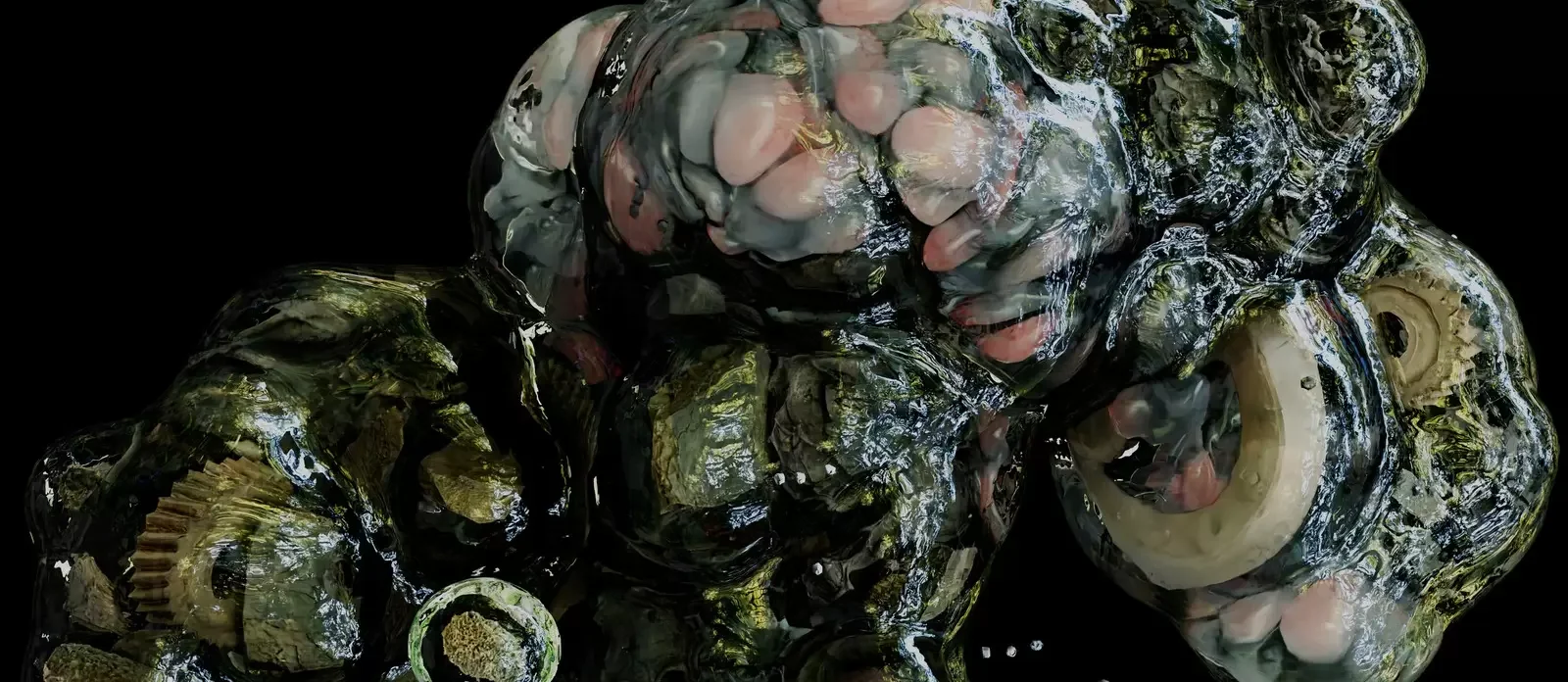
artwork by u2203


Liza Biletska




Disturbed Ground (2025-2026) is a collaboration between Kyiv’s ∄ and CTM Festival that brings together Ukrainian and European artists to examine the ecological impact of russia’s full-scale invasion. Co-curated by ∄, CTM, Mariana Berezovska, and alen hast (u2203), and supported by the Goethe-Institut, the project builds on the earlier research programme Echoes of the Earth. In June 2025, artists worked on-site at ∄’s u2203 studio in Kyiv, engaging with researchers studying environmental damage across Ukraine.
Two new audiovisual performances form the core of the project. Heavy Waters by undo despot, Zeynep Schilling, and alen hast + myk rudik traces the layered life of rivers as carriers of memory, sediment, and wartime violence. The Core by Khrystyna Kirik and Mark Bain creates an embodied listening encounter with land and infrastructures under siege. Together, these works seek new sensorial and affective ways of relating to ecocide, insisting that damaged environments remain living systems still speaking to us.
2204 (known as ∄ or K41) is a Ukrainian Kyiv-based community-driven cultural space for multidisciplinary explorations.
Echoes of the Earth residency and exhibition (2024), curated by Mariana Berezovska, Mila Kostiana, and u2203 by ∄, explores environmental destruction in Ukraine through six multimedia installations. Created during a two-month residency supported by Göthe Institut, six selected Ukrainian artists, Glam Gargoyle, Liza Biletska, Vartan Markarian, Khrystyna Kirik, Matvii Kozlov, and Olha Oborina, in collaboration with Alen Hast and Myk Rudik from Studio u2203, transformed scientific field research into an interconnected narrative using sound, light, photogrammetry, gaming elements, and sculptural works.
The project builds on field research by Ukrainian ecologists Oleksii Vasyliuk, Iryna Zamuruieva, Anna Kuzemko, Olena Marushevska, and Mykhailo Son, who documented extensive environmental destruction caused by military occupation. Their research reveals the devastating impact of the Kakhovka dam destruction and contaminated water systems, while also highlighting the demolition of water treatment facilities leading to river pollution. The occupied territories face additional challenges through mining of natural preserves and protected areas, widespread chemical and soil contamination, and systematic forest burning that disrupts entire ecosystems.
Echoes of the Earth


The idea for the Echoes of the Earth residency emerged from our community's concern about the ecological destruction caused by the russian war against Ukraine—a critical issue almost overlooked by global attention. We sought to create a platform that could amplify this narrative, transforming scientific research into a dialogue with public awareness and making research data more emotionally accessible.
In a way, this approach references Susan Sontag's essay "Regarding the Pain of Others," but expands beyond a human-centric commentary on war. We aimed to give voice not just to human suffering, but to all forms of life impacted by ecological devastation—the rivers, forests, wildlife, and entire ecosystems caught in the invasion’s destructive actions.
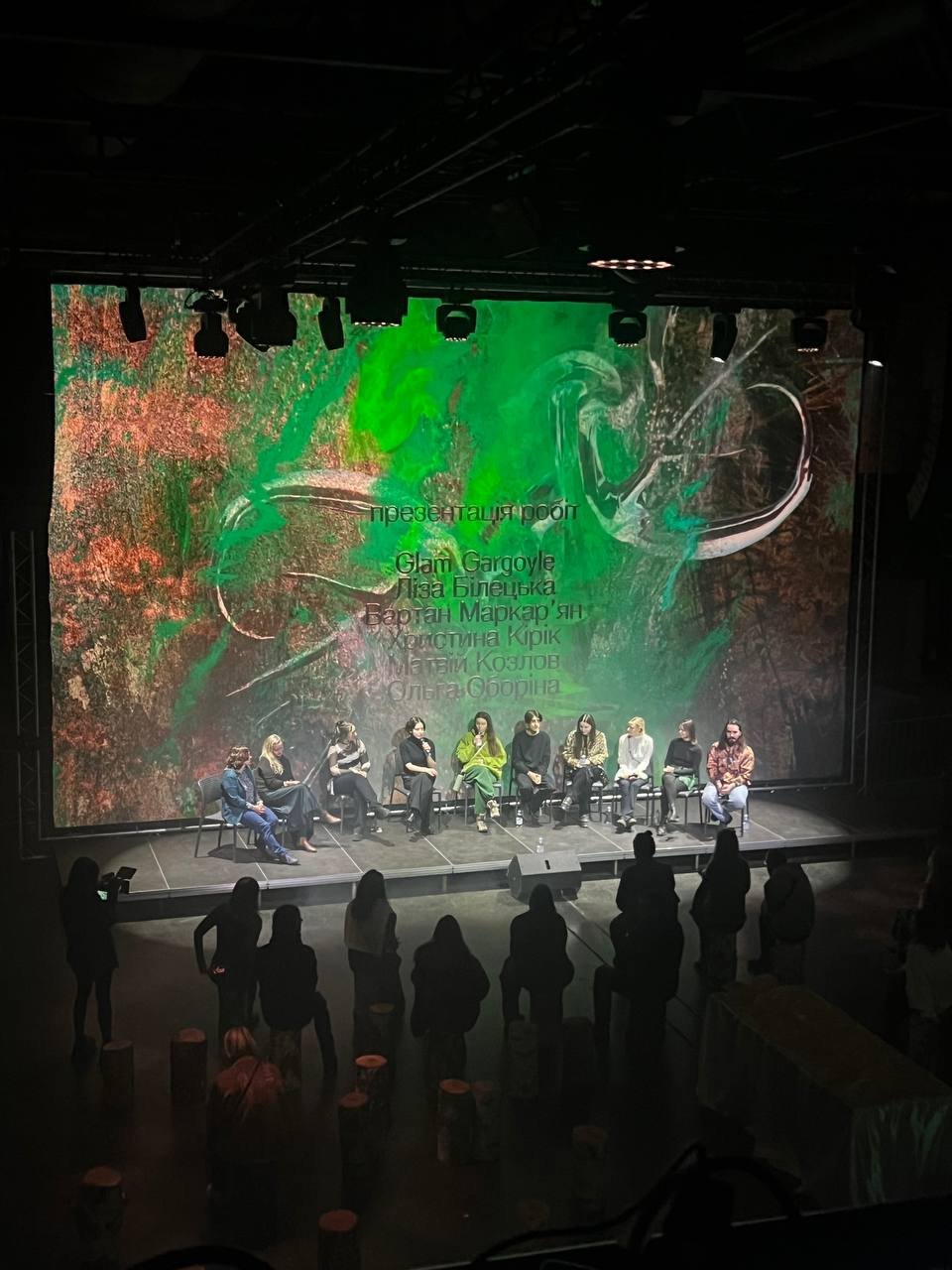
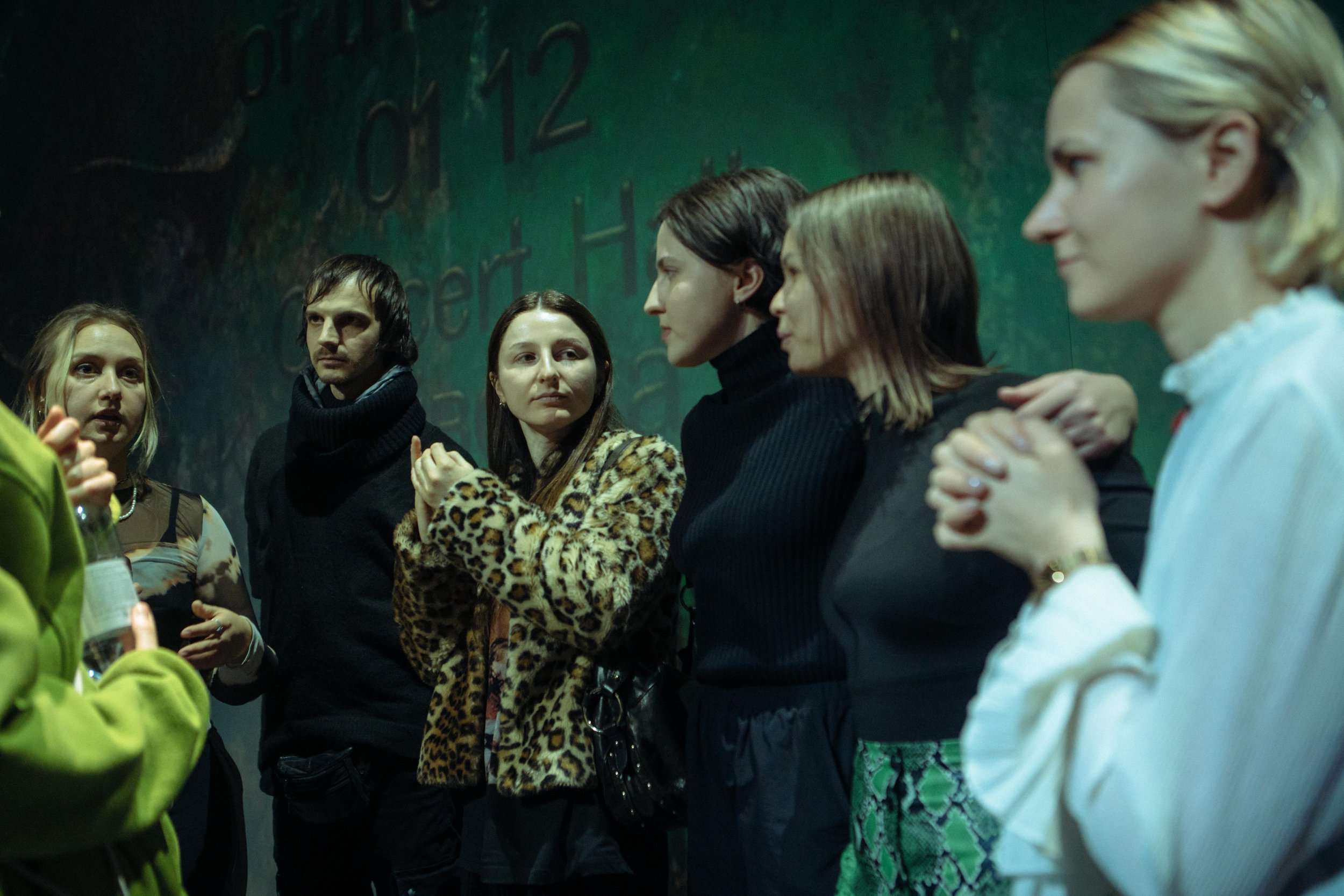
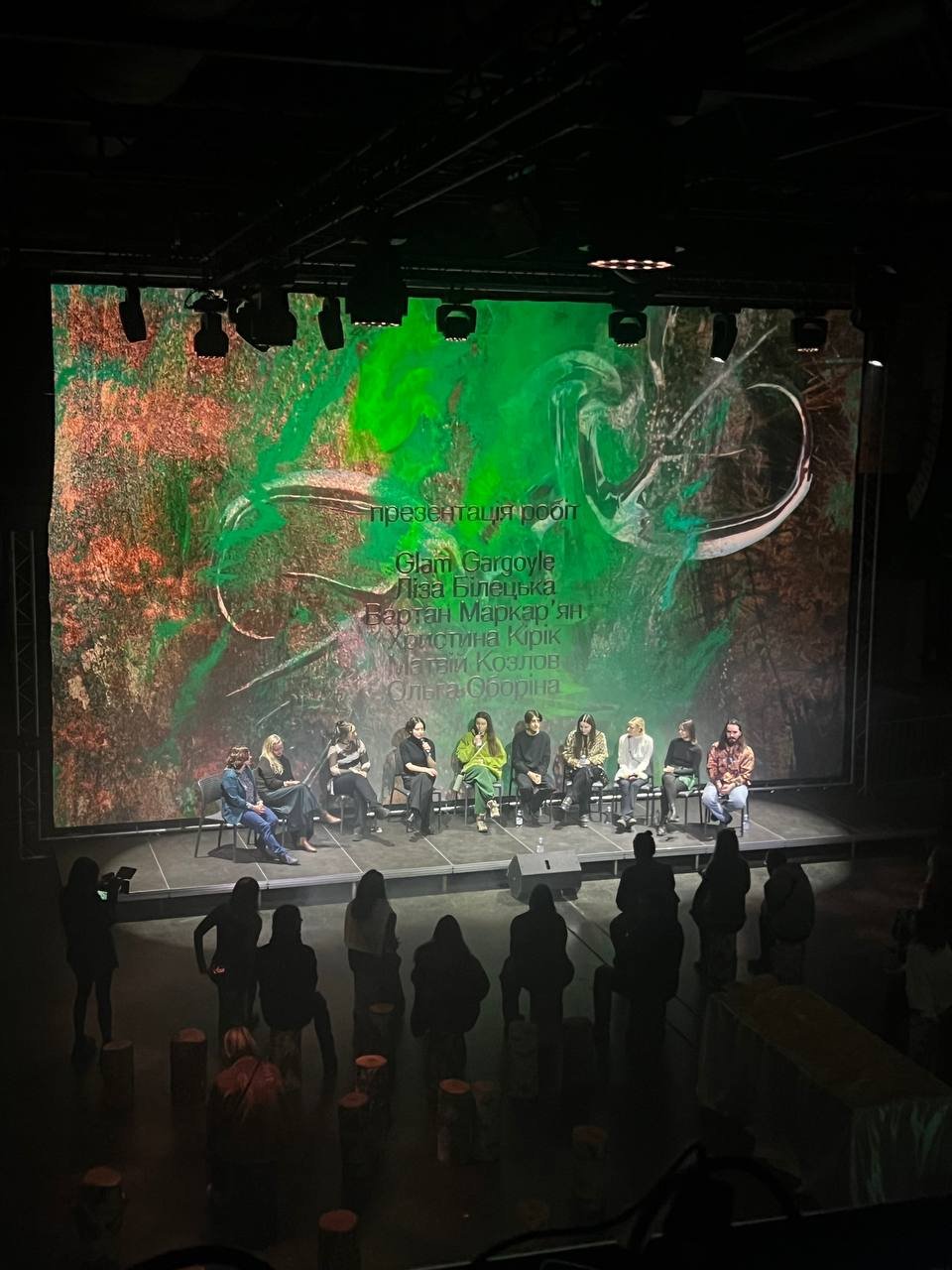
At the conclusion of the exhibition, a panel talk brought together all participating artists and ecologists. For many ecologists, it was their first time engaging directly with artistic interpretations of their research, opening a dialogue about creative vision and ecological destruction and why both should coexist.
As Olena Marushevska noted, experiencing nature's voice through artistic interpretation brought her closer to it than any human discourse about nature could. The panel became an unexpected therapy session, demonstrating how artistic storytelling can help audiences connect with critical ecological issues without being overwhelmed by raw data.
Echoes of the Earth: the residency


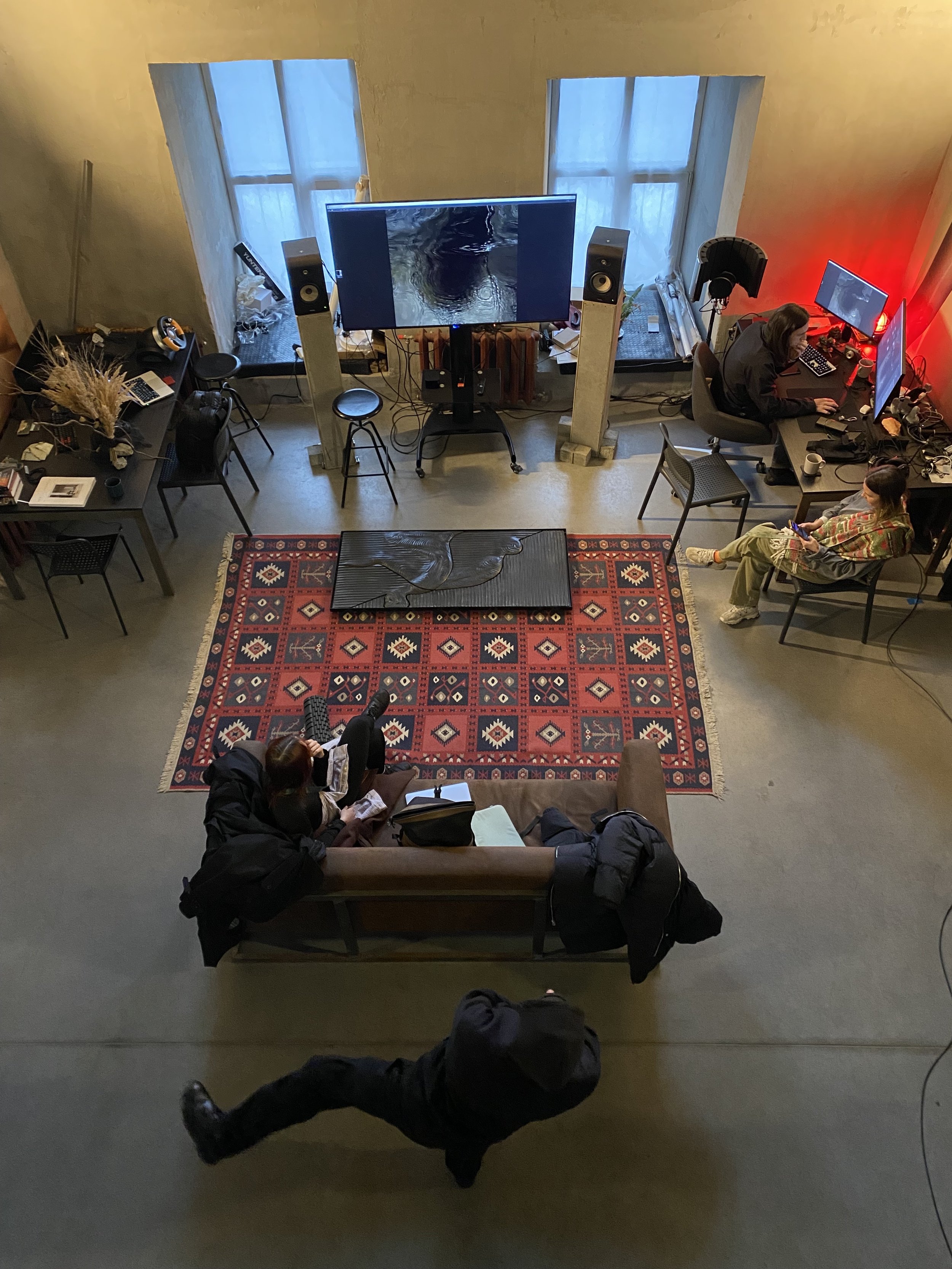
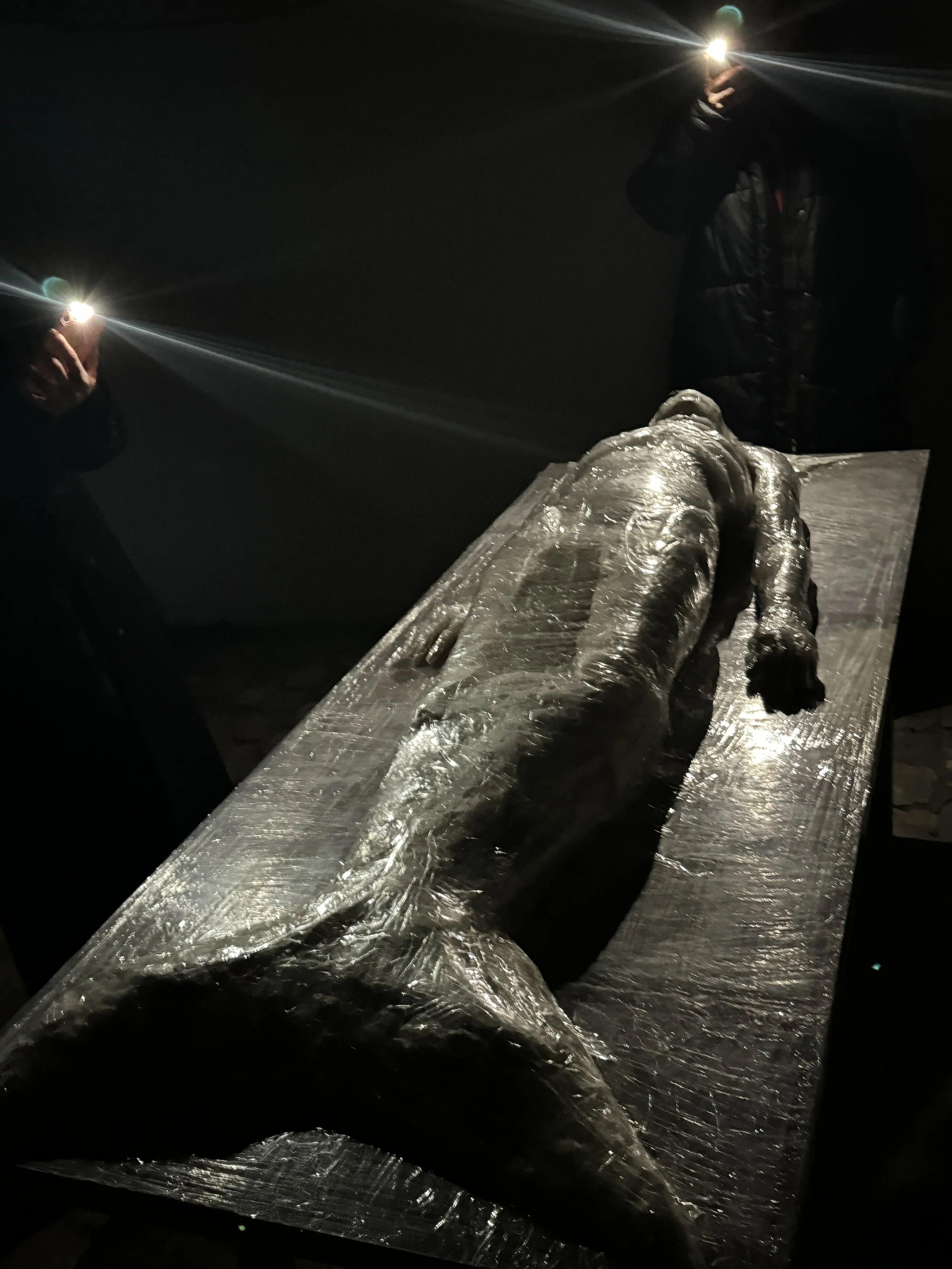
We were new to bridging artists and scientists, unsure if Ukrainian artists would be interested in such a collaborative approach. Surprisingly, our open call for artists received over 100 diverse applications exploring ecological disaster through creative lenses. We selected six projects that aligned with scientists' research and the studio's capabilities— digital art and design, AI tools, photogrammetry, 3D and game development, and sound design.
The residency unfolded over two months. The first month focused on knowledge exchange: regular calls with ecologists allowed artists to get to know the research, share ideas, and collect data. We paired artists with researchers based on aligned ecological interests. Artists were selected through an open call, bringing their existing visions and interests in ecology which they deepened through specific research topics. Some artists significantly revised their initial proposals based on the research phase.
During the second month, artists developed projects under our team's curation, working closely with Mariana Berezovska, Mila Kostiana and Studio u2203. The studio was integral to the creation process, either consulting on digital tools or collaborating directly, as with Krystyna Kiryk and Olha Oborina. Our goal extended beyond documentation—we wanted to create an environment where the evidence of nature's destruction could be understood on intuitive and emotional levels, not just intellectually.
While ambitious for its timeframe, future project stages will allow for more resident interaction and exchange of research findings. The first results were presented through a multimedia group exhibition and panel talk at ∄'s Concert Hall (Kyiv, 2024). As an ongoing project, Echoes of the Earth will continue to develop through music and multimedia releases, documentation and talks, an interactive website and archive, and collaborative performances, including planned presentations with Berlin's CTM festival.